
 By
By (Agon & Areté resumes the publication of articles after overcoming a number of personal and professional challenges. As the founder and director of this platform, I would like to thank readers for engaging with these contents, which have been produced with academic rigor, journalistic responsibility, and editorial independence, and are intended for Spanish-, Portuguese-, English-, Arabic-, and Mandarin Chinese-speaking audiences).
By Sandro Angulo Rincón
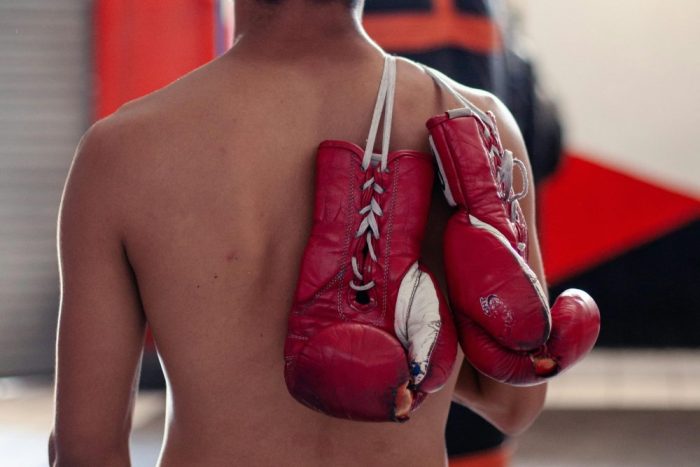
Hanging up one’s boots, racket, or boxing gloves are among the colloquial expressions used by both society and athletes to refer to the retirement—whether planned or premature—from high-performance sport. This Agon & Areté article examines the causes, consequences, and challenges faced by retired athletes through the lenses of communication epistemology, psychology, and philosophy.
The athlete has been chosen by the gods. He or she becomes a national hero, acquires privileges through proximity to political and economic power, enjoys financial prosperity and public admiration, and is immortalized in the memories of generations who celebrate athletic achievements and victories. However, when athletes construct their identity primarily around accomplishments and medals rather than around their condition as human beings, psychological distortions may emerge once they are forced to retire from professional competition.
Elite sport is a modernist project characterized by the pursuit of records, in which athletes are quickly taught that recognition must be earned through measurable victories. Furthermore, the modernist understanding of sport has been reinforced by advances in science that have provided increasingly sophisticated knowledge and technologies for evaluating athletic performance. As a result, the human body has often been explored and treated as a machine that can be manipulated and improved. Within this culture, dominated by narratives of youth, hegemonic performance, and superiority over others, aging becomes potentially problematic. According to the dominant narratives of Western media, the arrival of physical decline signals that it is time for the athlete to retire.
Víctor Hugo Aristizábal, a former Colombian football player, continued to automatically perform the ritual of preparing his sports bag and getting ready for training, even after retiring due to a chronic knee injury. Similarly, former Filipino boxer Manny Pacquiao, after a brief foray into politics, decided to return to the ring in 2025 at the age of 46 to challenge Mario Barrios, an American boxer sixteen years his junior, for the World Boxing Council welterweight title. The bout ended in a draw. Pacquiao, who won twelve world titles across eight different weight divisions, told the press that he returned because “boxing is his passion.”
Similar cases include Michael Jordan’s two returns to the NBA (1995 and 2001) and Tom Brady’s comebacks in 2022 and 2023. Brady, one of the most accomplished quarterbacks in the history of the National Football League (NFL), exemplifies how attachment—sometimes bordering on obsession—to sporting glory can make it difficult for athletes to return to the “world of ordinary mortals” and embrace new life projects. As British rugby player Catherine Spencer wrote in The Guardian, “The support of the crowd and the country is like a drug,” adding, “Who are you if not the elite athlete who spends every hour planning and training?”
According to Suzanne Cosh and her colleagues, up to 20% of retired athletes continue to experience crisis transitions characterized by poor adaptation, persistent psychological distress, depression, substance abuse, social isolation, exercise addiction, high levels of anxiety, and low self-esteem. One recurring pattern identified by these researchers was the absence of hobbies or alternative activities with which to occupy one’s time. Another common pattern was the loss of a predetermined daily routine, forcing retired athletes to structure and organize their own schedules.
Libby, one of the athletes who participated in the study, stated: “As athletes, we are often told what our routine is and what goals we should pursue and discuss with our coaches. Then, when we retire, we are confronted with the real world, and suddenly it feels as though we have to create our own daily activities. That was completely foreign to me… I had nothing outside of swimming. I tried to build something beyond the sport, so I went to university, but it was not necessarily a passion.”
Monica Vilhauer, Ph.D. in Philosophy, argues that one of the first themes that emerges in conversations with athletes about what matters most in their lives is the feeling that their worth as human beings is based on victories, medals, and records. This, she contends, lies at the root of one of the major crises associated with the retirement transition. Athletes find themselves asking: If I no longer win, what am I worth? What is the meaning of my life? What makes me special?
Vilhauer further explains that “athletes often tell stories about childhood coaches (and sometimes parents) who praised them only for their victories and were highly critical of every mistake. The attention and care they received while growing up were conditional in nature, privileging the message that what matters most is not who they are, but what they do (and, more specifically, the outcomes of what they do compared to others). Athletes internalize this message and come to believe that they are worthy as human beings—and worthy of love—only when they win. As a result, they become trapped in an unstable and anxious situation in which their sense of self-worth rises and falls with the chaos of results that are largely beyond their control.”
Athletes frequently emphasize that “the focus was always on results,” that “we never really had a voice,” that “there was no opportunity to express an opinion or make our own decisions,” and that “anything that represented the real ‘me’ was suppressed.” Some even report that, despite achieving first place, they struggled to enjoy victory because they feared being criticized for some flaw in their performance at the next competition.
Another recurring theme that emerges in athletes’ narratives, according to researchers Noora J. Ronkainen and Tatiana V. Ryba, is the perception of inadequate support—or even abandonment—by their respective national sporting organizations. Athletes often accused these institutions of providing only superficial and symbolic assistance rather than genuine, long-term support.
In Groundwork of the Metaphysics of Morals, the German philosopher Immanuel Kant (1724–1804) argues that morality requires us to treat and respect human beings as entities of absolute value, or as “ends in themselves,” rather than merely as instruments for achieving particular objectives. In contrast, “relative ends” are objects, animals, and things to which a price can be assigned and which may therefore be exchanged or replaced.
As expected, “forced” retirements—those in which athletes are compelled to leave sport because they are no longer wanted by their teams, their contracts are not renewed, their physical performance declines, or they suffer chronic injuries—were most frequently associated with the patterns described above. By contrast, athletes who planned their retirement voluntarily experienced a less traumatic transition to a life with reduced fame and recognition. This was largely because, throughout their sporting careers, they had acquired new knowledge and skills while also developing strong support networks.
Although the phenomenon has occasionally attracted scholarly attention, the return to elite sport after retirement is often portrayed by the media as an unhealthy obsession or as something driven not by rational choice but by emotion, compulsion, and the need to compete. However, the return to elite competition following retirement—as in the cases of Jordan, Brady, and Pacquiao, among others—remains underexplored in academic research.
Existing studies suggest that this transition can be highly stressful for athletes, as they must adapt to the renewed demands associated with increased training loads and performance expectations, while simultaneously confronting the psychological and psychosocial challenges inherent in high-performance sport.
Recommendations for a Healthy Transition
Sport psychologist Tess M. Kilwein recommends several strategies that athletes can implement to ensure that retirement—or the transition to a life beyond elite sport—is both smooth and enriching.
Many athletes postpone preparing for retirement until it is immediately before them. However, the transition to a new life project is a process rather than a single outcome. For this reason, athletes are encouraged to plan for life after sport throughout their entire athletic careers. Preparing in advance by acquiring experience, training, and professional connections can significantly facilitate the retirement process.
Strengthen Identity Beyond Sport
Although developing a strong athletic identity is crucial for sporting success, many athletes fail to explore who they are outside of competition. As a result, when sport is taken away, they are often left without a clear sense of purpose or direction. Athletes are therefore encouraged to explore their personal identities, interests, and aspirations from an early stage in their careers.
Create New Routines
Retirement from competitive sport often entails the loss of routines that were essential during athletic participation. Developing and maintaining new routines—such as regular exercise, social activities, and consistent sleep schedules—can create a sense of familiarity and stability that facilitates adjustment to life beyond sport.
Maintain a Connection with Athletics
Although it may be tempting to distance oneself completely from sport in order to avoid the psychological pain associated with retirement, maintaining some level of athletic identity and connection to sport can be highly beneficial. This can be achieved through coaching, mentoring, or recreational participation. Athletes are encouraged to share their experiences and knowledge with others.
Apply the Skills Acquired Through Sport
Upon leaving competition, many of the skills developed through athletic participation can contribute to personal and professional success in other areas of life. Effective goal setting, leadership development, teamwork, and communication skills are among the competencies whose value extends far beyond the sporting arena.
Do Not Face the Transition Alone
Leaving sport can be a lonely and confusing experience, particularly when athletes lose immediate access to their established support networks. Social support, in general, can facilitate major life transitions. However, guidance from former athletes who have already navigated retirement, coaches, or sport psychology professionals trained to support healthy athletic transitions may prove even more valuable.
A different perspective is offered by existentialist philosophy, a school of thought concerned with the analysis of human existence in society, responsibility, freedom, and the meaning of life. From an existentialist standpoint, one should remain skeptical of a sports industry that reduces human beings to mere functional machines and fails to cultivate awareness of our own finitude. Yet it is precisely this awareness that can enable a deeper understanding of the more spiritual dimensions of human existence.
Indeed, some athletes who embrace this perspective associate aging with several potentially positive outcomes, including the ability to gain broader perspective, cultivate presence and enjoyment throughout their careers, reduce competitive anxiety, and develop a greater appreciation for the running or sporting community. Such an outlook stands in contrast to an exclusively individualistic conception of success.
Follow us on Facebook, X (formerly Twitter), and LinkedIn.

