
 By
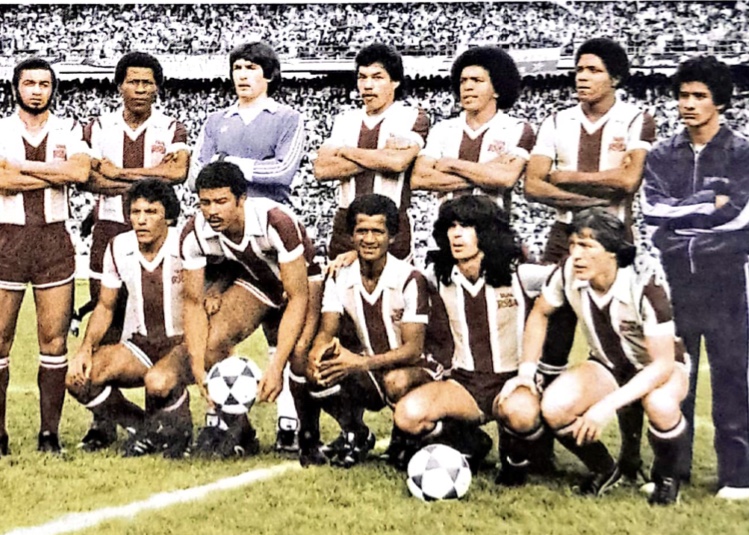
Janio Cabezas Valois (third from the left in the bottom row), a former Colombian footballer who played during the 1970s and 1980s, fondly recalls the defining moments of his career in Colombian professional football and the experiences that shaped his life through the sport.
By: Carlos Daniel Chaves Cárdenas, Jessica Lorena Ferreira Robayo, and Juliana Lucía Castillo Carrillo.
Academic Advisor: Sandro Angulo Rincón.
Born in Buenaventura and raised in the warmth of a large family, Janio Cabezas discovered at an early age that his life was destined to revolve around a football. In the early 1970s, following his family’s relocation to Cali, he pursued his first great dream: earning a place at Deportivo Cali. For four months, he sought an opportunity to prove himself, but ultimately failed to make the team. Far from abandoning his aspirations, his journey took a new direction when his mother decided to move the family to the Colombian capital. There, he tried again, this time with Millonarios, only to face another rejection that did little to diminish his determination.
It was then that an unexpected, almost imperceptible turning point emerged, one that would profoundly shape his life. Independiente Santa Fe offered him the opportunity that other clubs had denied him. He initially joined the club’s youth academy, where his talent began to develop under a more rigorous training regime. Just six weeks later, he was promoted to the first-team squad, as though fate had been waiting for precisely the right moment to reveal itself.
In 1974, Janio Cabezas made his official debut for Santa Fe, bringing to fruition a journey that had begun in Buenaventura and taken him through different cities, trials, and rejections before he finally found his place in professional football. It marked the beginning of a career that would not only fulfil a personal dream but also allow him to write his own chapter in the history of Colombian sport.
Over the following five years, including a brief spell at Deportes Quindío in 1976, Janio Cabezas developed and matured as a player at Independiente Santa Fe. During this period, he progressed from a promising youngster to an established attacking option. His early years in the first-team squad were defined by the challenge of competing for a place alongside Ernesto Díaz, one of the club’s leading figures and among the most prominent forwards in Colombian football at the time. Competition for the position was intense, but it also proved invaluable to his development. Beyond their rivalry on the pitch, the two players formed a friendship that contributed to Cabezas’s growth both as a footballer and as an individual.
Nevertheless, his ambition to secure more playing time and continue developing prompted him to make a pivotal decision in his career. In 1979, convinced that he needed new challenges, he approached Santa Fe’s management to express his desire to explore opportunities elsewhere. The club responded favourably, and later that year he embarked on a new chapter in international football.
His destination was Deportivo Táchira, which he joined on loan. The move represented not only an opportunity to enjoy more regular first-team football but also the challenge of adapting to a different environment, with a new competitive rhythm and greater demands. It was another step in a career built on perseverance, one that was now beginning to broaden his horizons beyond Colombia.
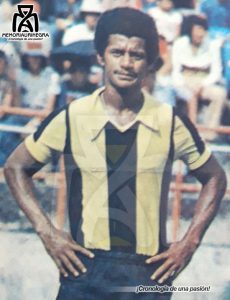
With Janio in the squad, the project achieved its first major success: on December 9, 1979, Deportivo Táchira won the Venezuelan First Division championship, the first league title in the club’s history. That achievement represented more than simply adding a star to the club’s honours. It marked the emergence of a winning identity that, over the following decades, would establish Deportivo Táchira as one of Venezuela’s leading football clubs. Janio had already become part of the history of an institution that would eventually rank among the most successful in Venezuelan football.
Following his championship triumph in Venezuela, his career briefly brought him back to Colombia. He spent a short period at Cúcuta Deportivo, a transitional spell that preceded one of the most significant chapters of his professional journey. Later that same year, in 1980, his career took another turn when he was signed by Deportes Tolima.
Initially, the move did not appear particularly remarkable. Joining Deportes Tolima, after playing in Venezuela and spending time at Cúcuta Deportivo and Deportes Quindío, did not represent the same career advancement as wearing the shirt of Independiente Santa Fe, a club with a long-established tradition. Instead, it seemed to be another challenge along the way, at a club that had historically struggled to compete for the leading positions and was seeking to change its fortunes.
However, the situation began to transform with the arrival of Gabriel Camargo as the club’s president and owner. His involvement marked a turning point in the institution’s history. Camargo set out to implement an ambitious restructuring programme, investing in the recruitment of high-calibre players across different positions with the aim of changing the team’s competitive trajectory.
Within this emerging project, Janio found not only regular playing opportunities but also a competitive environment that enabled him to develop his abilities further. It was there that he established strong connections with several teammates whose contributions raised the team’s overall standard, helping to shape a squad that was beginning to inspire optimism among supporters. For him, this period became much more than another stage in his professional career: it comprised four intense years of development, prominence, and consolidation, during which he fully established his identity as a footballer.
The true significance of his arrival at Deportes Tolima centred on one key figure: Gabriel Camargo. More than a club executive, Camargo became a decisive influence in his life, marking a turning point both on and off the pitch.
Janio recalls that their agreement was reached with unusual speed, almost immediately. What truly made the difference, however, was Camargo’s commitment to honouring every promise. Until then, despite having spent six years in professional football, Janio had pursued his career without a solid financial foundation. Money disappeared almost as quickly as it arrived, leaving little room for long-term planning or financial stability.
Everything changed through one tangible opportunity. The prospect of owning a home represented security and the beginning of a new outlook on life. His first contract with Tolima ceased to be merely a professional sporting arrangement and became the starting point for building a more stable future.
The influence of Camargo and those around him extended well beyond financial matters. In that environment, Janio learned to think in the long term, manage his resources, prioritise his family, and understand that a footballer’s career is shaped by decisions made beyond the pitch. Consequently, his time at Tolima was not only decisive for his professional development but also profoundly transformative on a personal level, becoming one of the most important chapters of his life.
At Deportes Tolima, opportunities were never simply handed to him; he had to earn them in every training session. Janio recalls that the standard of the squad was so high that even being included among the players selected for a match represented an achievement. At a time when only fourteen players were named in the matchday squad, internal competition constituted the first major challenge.
In his position, the demands were particularly intense. He competed for a place alongside experienced and highly accomplished footballers such as Evaristo Isasi, an Intercontinental Cup winner with Paraguay’s Olimpia, and Eladio Vázquez, a prolific goalscorer in Colombian football. Cabezas himself also possessed the qualities required to secure a starting position, making the competition especially fierce.
Later, the competition intensified with the presence of players such as Cristino Centurión, Víctor Hugo del Río, Américo Quiñones, and “Piña” Mendoza. Elsewhere in the attacking line, a young Arnoldo Iguarán was also emerging, a player whom Cabezas himself regards as one of the finest forwards in Colombian football.
One of Janio Cabezas Valois’s goals for Deportes Tolima, scored against Atlético Nacional in 1981.
Source: Personal archive.
Deportes Tolima possessed considerable depth in attack, with highly talented players competing for every position. Against this backdrop, Cabezas’s regular inclusion in matchday squads and his participation in some of the club’s most significant campaigns confirmed both his development as a footballer and his ability to perform at the highest competitive level.
One particular event profoundly affected this group of players, who were on the verge of achieving a remarkable sporting feat, and ultimately gave even greater significance to what followed. In the midst of a campaign that already reflected the growing strength of the Pijao team, a tragedy occurred at the stadium in Ibagué, altering the course of the season.
It was November 18, 1981, during a match between Deportes Tolima and Deportivo Cali. Janio recalls that, while the players were still in the dressing room, they heard a sudden, deafening crash. The main safety railing on the southwestern side of Manuel Murillo Toro Stadium had collapsed. Uncertainty immediately engulfed everyone. As the players emerged from the dressing-room tunnel, the match was no longer their primary concern. Janio immediately thought of his family, who were seated in the upper stands, away from the danger. Distressed by what had happened, he searched for them among the crowd, escorted them out of the stadium, and made sure they were safe. For a moment, football became secondary to everything else.
As the hours passed, the severity of the tragedy became clear: the collapse of the stadium structure had claimed victims, left a deep emotional scar on the city, and rendered the venue temporarily unusable. Emotionally shaken, the team had to regroup while the competition continued. The decision was made to relocate its matches to Bogotá’s Nemesio Camacho Stadium, commonly known as “El Campín”. This unfamiliar venue would become the setting for one of the most dramatic episodes in the history of Deportes Tolima and Janio Cabezas’s career.
It was there that the decisive steps towards the runners-up position were taken. With approximately 45,000 spectators filling El Campín, Tolima faced Junior de Barranquilla in a match filled with drama. Janio opened the scoring, but the contest was far from over. What followed was an extraordinary exchange of goals between the two teams, culminating in a thrilling 3–3 draw as the match approached its final stages.
Just when the teams appeared destined to share the points, the decisive moment arrived. A free kick awarded near the edge of the penalty area created a sense of anticipation. Everything suggested that the responsibility would fall to the team’s set-piece specialist, Víctor Hugo del Río, who, as Cabezas recalls, regularly practised such situations during training. However, in an unexpected turn of events, Heberto Carrillo confidently stepped forward to take the kick. With his left foot, he struck the ball cleanly and precisely, leaving the goalkeeper with no chance of making a save. The ball hit the back of the net, unleashing an explosion of jubilation: 4–3.
Janio can barely remember which direction he ran. All he knows is that he was overcome with emotion as he rushed to embrace Carrillo. It was a moment of unrestrained joy and emotional release, standing in stark contrast to the tragic events experienced just weeks earlier at Ibagué’s principal sporting venue.
That victory secured the runners-up position and qualification for the 1982 Copa Libertadores. This breakthrough onto the international stage marked a turning point in his career. Competing in a continental tournament gave him the opportunity to discover the wider world through football.
His first Copa Libertadores campaign carried particular personal significance. Fate brought him face to face once again with Deportivo Táchira, the same club with which he had won a championship just a few years earlier. The reunion could hardly have been more successful: a 2–0 victory on Venezuelan soil, with Cabezas scoring the opening goal.
Deportes Tolima produced a memorable group-stage campaign. Drawn alongside Deportivo Táchira, Estudiantes de Mérida, and Atlético Nacional, the team finished first in the group without suffering a defeat, recording three victories and three draws. The achievement further confirmed the quality of the Colombian runners-up and the excellent form they had demonstrated throughout the competition.
In the subsequent three-team semifinal group, the level of competition increased considerably. Tolima faced Cobreloa and Olimpia, two opponents with substantial experience and established reputations in international football. Despite their efforts, the Colombian side was unable to maintain the level of performance displayed during the opening stage and ultimately finished at the bottom of the group.
Nevertheless, beyond the final standings, that campaign left a lasting legacy. It represented the consolidation of a sporting project and demonstrated that Deportes Tolima could compete confidently against some of South America’s most established clubs. The Copa Libertadores not only challenged Janio to face opponents of the highest calibre but also enabled him to travel across the continent, visiting Venezuela, Chile, and Paraguay. He recalls that each journey was a new experience that contributed to his professional development.
The people who accompanied him throughout this process also played a crucial role. Coaching staffs with international experience, managers, and fitness coaches contributed not only to his sporting performance but also to his broader development as a professional athlete. He maintained relationships with several of these individuals that endured for years and extended far beyond the football pitch.
After concluding his time at Deportes Tolima, Janio recalls his subsequent spell at Atlético Bucaramanga as another of the most significant chapters of his career. He arrived following an unremarkable period at Deportivo Cali, determined to rediscover his best form. He ultimately achieved that goal in an environment that quickly came to feel like home.
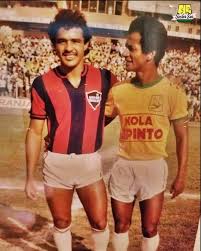
Fuente: archivo personal
Janio Cabezas Valois integra el equipo de fútbol Atlético Bucaramanga de Colombia.
En Bucaramanga se integró a una delantera de alto nivel, tan efectiva como memorable. Desde su posición como puntero derecho, compartió ataque con nombres como Alfredo Ferrer, el “Pirata”, como referente de área, y Miguel Opaldo González por el sector izquierdo, quien terminaría siendo goleador del fútbol colombiano durante dos temporadas consecutivas. Con el tiempo, ese frente ofensivo sumó aún más talento con la llegada de Héctor Ramón Sosa y, posteriormente, de Orlando Maturana, el “Pony”, un jugador que dejaría huella en el país.
Aquel grupo se destacó por su capacidad goleadora y por la conexión dentro y fuera de la cancha. Fue un equipo que marcó época para él, comparable a lo vivido en Tolima, tanto en lo deportivo como en lo humano. En Bucaramanga recuperó la confianza perdida en su paso por Cali, volvió a ser determinante y firmó una de sus mejores etapas, tres años en los que anotó con frecuencia, asistió a sus compañeros y se consolidó como un jugador clave en el frente de ataque.
Más allá de los números, lo que perdura para Janio Cabezas es el vínculo. Ese plantel se mantuvo unido con el paso del tiempo, conservando la amistad y el contacto constante. Para él, Bucaramanga representa un lugar que quedó grabado en su memoria, asociado a goles, alegrías y compañeros que, hasta hoy, siguen siendo parte de su vida.
A lo largo de su carrera Janio sumó tanto equipos y experiencias con compañeros de equipo, como el privilegio de vivir el fútbol en su estado más pasional, los clásicos. Pocos jugadores pueden decir que estuvieron en ambos lados de rivalidades tan marcadas, y él fue uno de ellos.
Atlético Bucaramanga sintió de cerca la intensidad del clásico santandereano frente a Cúcuta Deportivo, un duelo que se jugaba con orgullo. Haber vestido ambas camisetas le permitió entender esa rivalidad desde adentro, con todo lo que implica para la gente y para el jugador. Era, en sus propias vivencias, un partido que se jugaba como si fuera “a vida o muerte”.
Pero su recorrido lo llevó a experimentar clásicos en distintas regiones del país. En Cali vivió el enfrentamiento entre Deportivo Cali y América de Cali; en el Eje Cafetero, el duelo entre Once Caldas y Deportes Quindío; y en Bogotá, el histórico choque entre Independiente Santa Fe y Millonarios.
En todos encontró el mismo patrón: el clásico es un partido aparte. No importa la posición en la tabla, ni el momento del equipo. Puede que uno llegue mejor que el otro, pero dentro de la cancha todo se iguala. La exigencia emocional es distinta, la presión se multiplica y el significado trasciende lo deportivo.
Esa capacidad de haberlos vivido en diferentes contextos y ciudades le dio una mirada completa del fútbol colombiano, entendiendo que, más allá de los títulos o las estadísticas, hay partidos que se quedan para siempre en la memoria. Y para él, esos clásicos fueron precisamente eso: momentos únicos, cargados de tensión, orgullo y una pasión que solo se entiende cuando se vive desde adentro.
Entre tantas historias que le dejó el fútbol, hay una que Janio recuerda siempre con una sonrisa, especialmente cuando habla de sus compañeros y entrenadores argentinos, tan fieles a sus cábalas.
Durante su etapa en Deportes Tolima, vivió un episodio insólito que recuerda con humor: En la previa de un partido en Cali, el plantel se encontraba fuera del hotel, compartiendo un momento distendido, viendo pasar la gente por el centro de la ciudad. De repente, un gato negro cruzó justo frente a ellos. Hubo sorpresa, incluso cierta inquietud por las supersticiones, pero el hecho quedó como una anécdota más… hasta la noche del partido.
Ese día, Tolima dio el golpe y venció 2-0 al Deportivo Cali en el Pascual Guerrero, un resultado inesperado. Para algunos, fue fútbol; para otros, no había dudas: el gato negro había tenido algo que ver.
La historia no terminó ahí. Días después, antes de un nuevo partido, esta vez en Armenia, el técnico uruguayo, conocido como “Chema”, tomó una decisión que dejó a todos entre la risa y la incredulidad. Convencido de que había que repetir la “fórmula”, le pidió al utilero que consiguiera un gato negro para recrear la escena previa al triunfo en Cali.
La petición era completamente en serio. El utilero recorrió la ciudad buscando el famoso gato, pero al no encontrar uno negro, regresó con una alternativa: uno blanco. La respuesta del entrenador fue tan insólita como memorable: que lo pintaran, pero que apareciera un gato negro frente al grupo.
La anécdota resume a la perfección ese choque cultural que tanto marcó a Janio. Mientras en Colombia se hablaba de “agüeros”, para muchos argentinos y uruguayos las cábalas eran casi una religión. Si algo funcionaba, había que repetirlo tal cual: la misma ropa, las mismas rutinas, los mismos gestos.
Si el gato volvió a aparecer o no, lo cierto es que historias como esa quedaron grabadas para siempre. Son esos momentos, entre lo absurdo y lo entrañable, los que terminan dándole al fútbol un color especial, y los que Janio recuerda hoy como parte de una carrera llena de vivencias únicas.
Su identidad como futbolista
Más allá de los equipos, los títulos y los estadios que recorrió, Janio entiende su carrera como una suma de experiencias que formaron mucho más que a un futbolista. Desde aquel niño en Buenaventura que encontró en un balón una manera de imaginar su futuro, hasta el jugador que recorrió Colombia y otros lugares gracias a su talento, su camino estuvo marcado por las oportunidades que supo aprovechar y por los personajes que encontró en cada etapa.
El fútbol le permitió conocer distintas culturas e idiosincrasia propias de las ciudades donde vivió. Lo llevó a compartir vestuario con campeones del mundo, goleadores, figuras que posteriormente dejarían una huella en el fútbol colombiano y compañeros con quienes, incluso décadas después, mantiene una amistad. Cada equipo dejó algo diferente: Santa Fe representó la puerta de entrada al profesionalismo; Táchira, la posibilidad de convertirse en campeón fuera del país; Tolima, uno de los mayores puntos de crecimiento de su carrera y de su vida personal; Bucaramanga, el escenario para recuperar su mejor versión y volver a sentirse protagonista.
Pero al mirar atrás, parece que lo que más permanece no son necesariamente los resultados, cuando Janio habla de su carrera lo que menos menciona son los títulos que consiguió. Son las historias. Los viajes, los clásicos, las concentraciones, las bromas en los hoteles, las cábalas de sus compañeros argentinos y uruguayos, los abrazos después de un gol y las amistades que sobrevivieron al paso del tiempo. En cada recuerdo aparece una parte de aquel joven que alguna vez tuvo que escuchar que no era suficiente para jugar en Deportivo Cali o Millonarios y que, en lugar de rendirse, siguió buscando una oportunidad.
Quizás por eso Janio habla de su carrera con una mezcla de nostalgia y gratitud. El fútbol le permitió recorrer caminos que probablemente nunca imaginó. Le enseñó a competir, pero también a administrar su vida, a pensar en el futuro, a valorar a su familia y a entender que detrás de cada camiseta hay personas y experiencias que terminan acompañándolo mucho después de abandonar una cancha.
Su historia no se resume en los años que pasó dentro de un campo de fútbol. Se encuentra en las personas que conoció, en las ciudades que descubrió y en los recuerdos que todavía conserva. Porque para Janio Cabezas, el fútbol no fue únicamente una profesión: fue la manera en que terminó conociendo el mundo y, en el proceso, aprendiendo también a conocerse a sí mismo.

